
Why roof age is harder to pin down than it sounds
Homeowners across Central Texas ask the same question when they're selling a house, filing an insurance application, or just trying to plan ahead: how old is this roof, actually? It feels like it should be simple, but a roof's age isn't stamped anywhere visible, and most sellers and even some agents don't know the answer off the top of their head.
The confusion usually comes from mixing up the house's age with the roof's age. A home built in the 1990s in Leander or Round Rock has likely had at least one full roof replacement since then, sometimes two, especially with the hail and wind that moves through this part of Texas. Finding the real number takes a little digging in a few specific places.
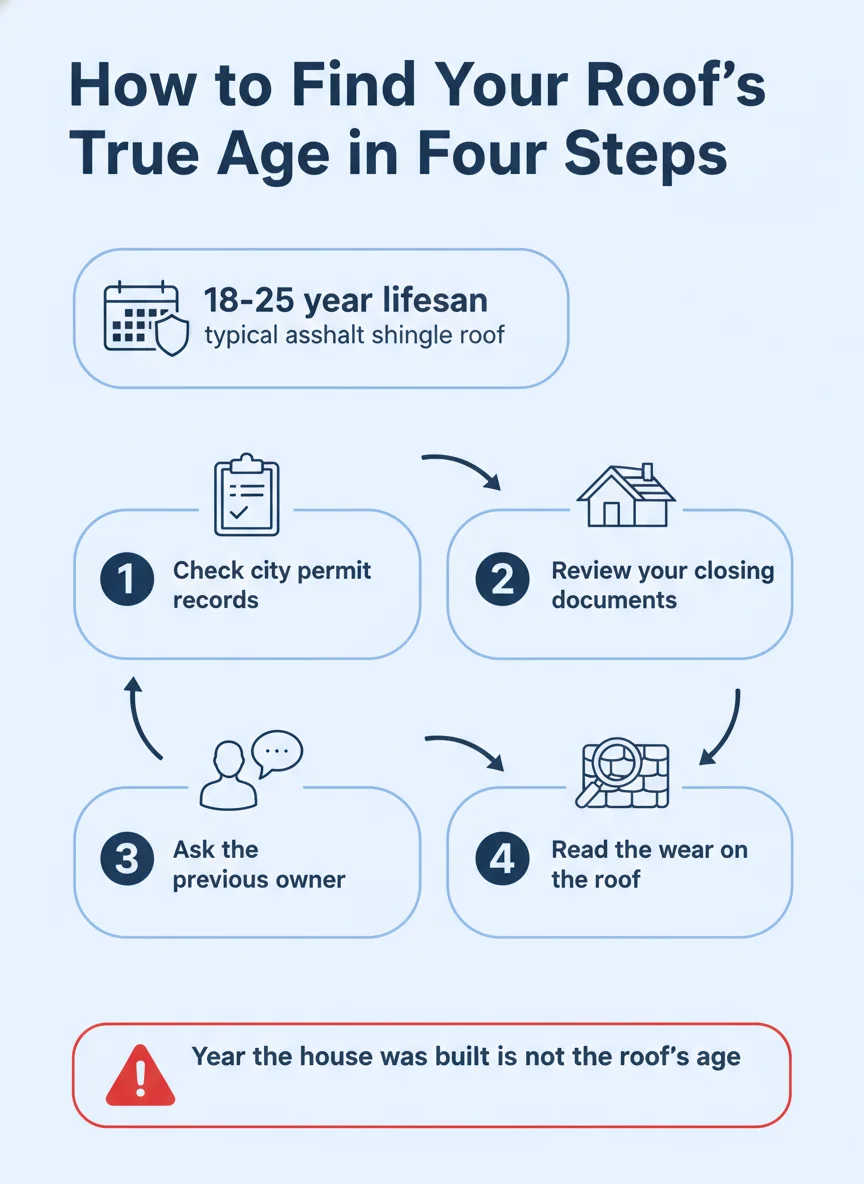
Why the build year on your deed doesn't equal roof age
The year a house was constructed only tells you the age of the original roof, and most original roofs don't last the life of the house. Asphalt shingle roofs in this climate typically run somewhere in the range of 18 to 25 years before they need full replacement, and severe weather can shorten that window considerably.
What county records actually show
County appraisal and tax records usually list the year the structure was built and sometimes note major permitted improvements, but they rarely itemize a roof replacement specifically unless it required a separate permit that got logged. Treat the appraisal district's build year as a starting point only, not an answer.
If the home has changed hands more than once, each sale can add a layer of uncertainty. A previous owner may have replaced the roof after a storm and never mentioned it in later disclosures, which is why cross-checking more than one source matters before you settle on a number.
What a building permit record can confirm
Most cities and counties require a permit for a full roof replacement, and that permit typically lists the date of work, the contractor of record, and sometimes the materials used. Searching your address through the local building department's online portal, where available, is often the fastest way to find a documented install date.
Older permits, especially anything filed before digital record-keeping became standard, may only exist on paper in a county office. A phone call or in-person request to the permitting office can still turn up that history even if it's not searchable online yet.
| Source | What it tells you | How reliable it is |
|---|---|---|
| County appraisal record | Year home was originally built | Low for roof age, doesn't track replacements |
| Building permit record | Exact date and contractor of a permitted roof job | High, if the work was permitted |
| Closing or disclosure paperwork | Seller's stated roof age or replacement date | Moderate, depends on seller's memory and honesty |
| Visual wear inspection | General age range based on material condition | Moderate, best combined with records |
The paperwork that's most likely to have the real date
If you bought the home through a standard sale, your closing packet is worth digging back out. Seller disclosure forms in Texas typically ask whether the roof has been replaced and when, and that answer, even if approximate, is often more current than anything on file with the county.
A homeowner's insurance file is another good source if you've had the same policy for a while. Many insurers ask for roof age at the time a policy is written or renewed, and that application may be sitting in your email or policy documents from years back with a number already filled in.
Step-by-step: tracking down your roof's real age
If you don't already have a number in mind, work through these sources in order. Each one narrows the range, and combining two or three usually gets you close enough to make a real decision about maintenance or replacement timing.
- Search permit records: Look up your address on the city or county building department's permit portal, or call if nothing shows up online.
- Pull your closing documents: Check the seller's disclosure and any inspection report from when you bought the house for a stated roof age.
- Check your insurance file: Review old policy applications or renewal paperwork, since many insurers record roof age at underwriting.
- Contact the previous owner: If you can track them down, a direct question about when the roof was replaced often gets a straight answer.
- Look for a warranty sticker: Some installers leave a tag or sticker in the attic near the decking with the install date and contractor name.
- Get a visual read: A free roof inspection can estimate an age range from granule loss, curling, and fastener condition.
What the wear on the roof itself can tell you
Signs of an older asphalt shingle roof
Granule loss is one of the clearest tells. Asphalt shingles shed their protective granules as they age, and you'll often see dark streaking or bald patches where the mat underneath is exposed. Curling or cupped edges on individual shingles are another sign a roof is well into its service life rather than freshly installed.
Fastener condition matters too. Nail heads that have backed out or are visibly rusted usually point to a roof that's been through more than a few seasons of Texas heat cycling the materials. None of these signs give you an exact year, but together they tell you whether you're looking at a 5-year-old roof or a 20-year-old one.
Signs of a more recently replaced roof
A roof that was replaced in the last few years usually has uniform color across all shingles, sharp uncurled edges, and clean flashing around chimneys and vents with no visible rust or sealant cracking. If the attic has any construction debris, leftover shingle wrappers, or a dated sticker from the installer, that's another strong clue the work is recent.
Comparing your roof's wear against the typical lifespan chart for its material type is a quick sanity check once you have a rough age range from the visual inspection and the paperwork search.
What you can check yourself and when to call a pro
Pulling permit records, digging through closing paperwork, and calling a previous owner are all things you can do from your kitchen table with a phone and a computer. None of it requires climbing anything or any special knowledge, just patience and a willingness to make a few calls.
Getting on the roof itself to check wear patterns up close is where it's worth bringing in someone who does this for a living. Walking a roof safely, knowing what granule loss looks like versus normal weathering, and spotting flashing issues that don't show from the ground all take experience most homeowners don't have reason to build.
A licensed roofer can usually narrow the age range in a single visit by combining a visual inspection with whatever documentation you've already gathered. That combination is far more reliable than either approach alone, especially if you're trying to make a real decision about repair versus replacement.
Putting the pieces together
No single source is likely to hand you a confirmed install date on its own. The strongest approach layers a records search with a visual read of the roof's actual condition, which is also the best way to catch problems like damage past the point of repair before they turn into a bigger bill.
Homeowners anywhere from Leander to the surrounding Central Texas towns can run through this same checklist regardless of who built the house or how long ago. Once you have a real age range in hand, Total Building Experts Roofing & General Contractor can help you figure out what it means for your next move, whether that's routine maintenance or planning ahead for a replacement.
Frequently asked questions
Does the year my house was built tell me how old my roof is?
No, not unless the roof has never been replaced. Most homes get at least one full roof replacement before they hit 30 years old, so the build year on your deed or county record often has nothing to do with the roof currently over your head.
Where do I find roof permit records for my house?
Your city or county building department keeps permit records, usually searchable online by address. Roof replacements almost always require a permit, so if one was pulled legally, there should be a dated record with the contractor's name on it.
What if there's no permit on file for a roof replacement?
That usually means the work was done without a permit, or the record hasn't been digitized yet for older jobs. In that case your closing paperwork, seller disclosure, or a call to the county office for older paper files is the next place to look.
Can a roofer tell how old a roof is just by looking at it?
An experienced roofer can estimate a range based on wear patterns, granule loss, and material type, but it's an estimate, not a precise date. A free inspection paired with a records search gets you the closest to an actual answer.
Why does it matter if I know my roof's exact age?
Age drives decisions on insurance, resale, and maintenance timing. Insurers sometimes ask for roof age on a policy application, and knowing where a roof sits in its expected lifespan helps you budget for a replacement before a leak forces the issue.