
Why Roof Warranties in Central Texas Get Confusing Fast
A new roof usually comes with more than one piece of paper, and homeowners across Austin, Round Rock, and the surrounding towns often assume it's all one warranty. It isn't. A typical installation involves at least two separate guarantees, one from the material manufacturer and one from the contractor who installed it, and sometimes a third optional plan layered on top. Each has its own term length, its own list of what's covered, and its own rules about what cancels it.
The confusion matters because Texas roofs take a beating from UV exposure, hail, and wind, and a homeowner filing a claim years later needs to know which document applies to their situation. Understanding the difference before you sign anything, not after a leak shows up, is what keeps a legitimate claim from turning into a dispute over paperwork.
How Do These Warranty Types Actually Work?
Each warranty type protects a different part of the job, and they come from different parties with different obligations. Knowing who stands behind which promise tells you where to direct a claim when something goes wrong, instead of guessing or calling the wrong number first.
Material Warranties
The manufacturer of the shingles, metal panels, or other roofing material issues this warranty, and it covers defects in the product itself, such as premature granule loss or a manufacturing flaw in a panel seam. It does not cover damage caused by poor installation, storms, or normal wear from sun and weather over time.
Manufacturer coverage is usually tiered. A basic material warranty might run 20 to 30 years, while a certified-installer tier backed by the manufacturer can extend further, sometimes to a lifetime term tied to the original owner. The specific tier depends on the product line and the certification level of the installing contractor, so always ask which tier applies to your job.
Workmanship Warranties
This one comes from the contractor, not the manufacturer, and it covers installation errors, things like flashing that wasn't sealed correctly or fasteners placed in the wrong pattern. If a roof leaks because of how it was put together rather than a flaw in the material, the workmanship warranty is what applies.
Terms vary enormously by contractor since there's no industry standard length. Some contractors offer a short term, others put their workmanship guarantee in writing for a longer period. A written workmanship warranty, with specific terms spelled out rather than a verbal assurance, is what actually protects you if a dispute comes up later.
| Warranty Type | Who Issues It | What It Typically Covers |
|---|---|---|
| Material warranty | Product manufacturer | Defects in shingles, panels, or components |
| Workmanship warranty | Installing contractor | Installation errors like flashing or fastening mistakes |
| Extended/enhanced coverage | Manufacturer, often through certified contractors | Longer terms, sometimes added labor coverage |
| Standard limited warranty | Manufacturer (base tier) | Prorated material defects, shorter non-prorated period |
What's Actually in the Document You're Signing
Every warranty document breaks down into a few core parts: the covered party, the covered defect types, the term length, the transfer conditions, and the exclusions. The exclusions section is usually the longest part and the one most homeowners skip, but it's where you'll find the specific actions that can cancel coverage.
Extended or enhanced warranties, when offered, usually bundle the manufacturer's material coverage with a longer or more comprehensive workmanship term from a certified contractor. They can be worth the added cost if the base coverage is thin, but the only way to know is to compare the enhanced version against the standard one, term by term, rather than assuming more paper means more protection.
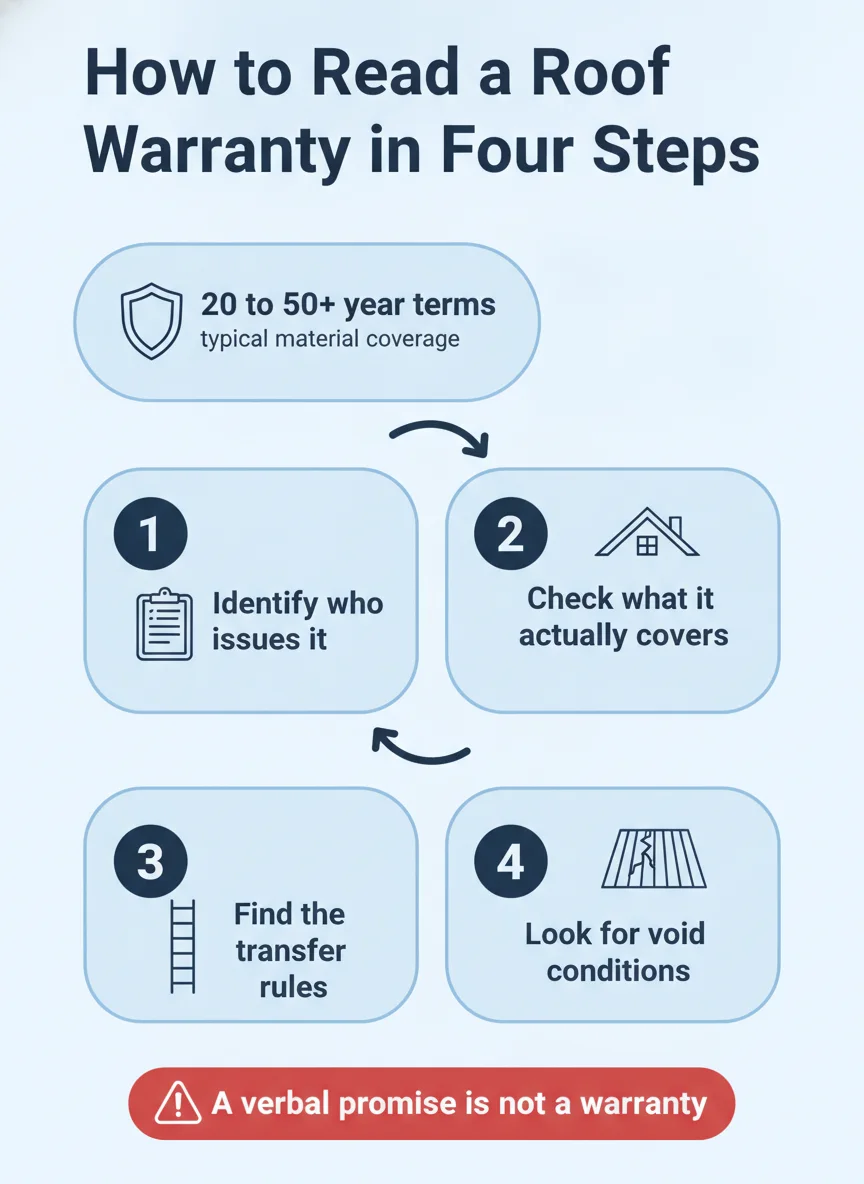
Step-by-Step: How to Read a Roof Warranty Before You Sign
Before work starts on a roof replacement, walk through the warranty paperwork the same way you'd read a lease. These steps keep you from finding out the hard way what's covered.
- Identify the issuer: Confirm whether each document comes from the manufacturer, the contractor, or a third-party coverage provider, since each has different obligations.
- Read the term length: Note the exact number of years for both material and workmanship coverage, and whether that term is full or prorated after a certain point.
- Check transferability: Ask whether the warranty transfers to a new owner if you sell, and whether there's a deadline or fee to make that transfer.
- List the exclusions: Write down what voids coverage, such as unlicensed repair work, improper ventilation, or skipped manufacturer accessories.
- Confirm the claim process: Find out who you contact first if a problem shows up and what documentation they'll require to process a claim.
- Get it in writing: Any verbal promise about coverage should show up on paper before the job starts, not after.
What Homeowners Find When They Actually File a Warranty Claim
The outcome of a warranty claim usually comes down to which type of failure occurred and whether the paperwork backs it up. A leak traced to a manufacturing defect in the material is a straightforward manufacturer claim. A leak traced to how the flashing was installed is a workmanship issue, and it's the contractor's responsibility, not the manufacturer's.
When the Material Warranty Applies
Material failures tend to show up as granule loss, cracking, or a defect in a panel seam that wasn't caused by impact or installation error. The manufacturer typically requires documentation and sometimes an inspection before approving a claim, and the remedy is often replacement material rather than a cash payout.
Storm damage, including hail and wind, generally falls outside material warranty coverage since it's treated as an external event rather than a product defect. That's where storm damage restoration and, where applicable, an insurance claim come into play instead.
When the Workmanship Warranty Applies
Workmanship issues usually surface as active leaks around penetrations, valleys, or flashing within the first few years after installation. Since this coverage comes from the contractor, the response time and process depend entirely on that company still being in business and standing behind its written terms.
This is also why checking how long a contractor has been operating, and getting their workmanship terms in writing rather than a handshake, matters as much as the length of the manufacturer's term.
What Can a Homeowner Check, and What Needs a Professional?
A homeowner can absolutely read and compare warranty documents on their own, and should, since it's a paperwork review rather than a technical inspection. Comparing the manufacturer's standard tier against any enhanced option, checking transfer rules, and listing the exclusions are all things you can do at your kitchen table.
What a homeowner generally can't do is determine, after a leak appears, whether the cause falls under material or workmanship coverage. That distinction usually requires someone who can trace the leak back to its source, whether that's a product issue, an installation gap, or storm impact, since misdiagnosing it can mean filing a claim with the wrong party entirely.
A free roof inspection is a reasonable first step when you're not sure which warranty applies, since it documents the actual condition and likely cause before any claim gets filed. That documentation is often what a manufacturer or contractor asks for anyway.
Getting the Right Coverage From the Start
The best time to sort out warranty coverage is before the first shingle goes down, not after a leak shows up three years later. Ask every bidding contractor to put their workmanship term in writing, confirm which manufacturer tier applies to your installer's certification level, and keep copies of both documents somewhere you'll actually find them again. For a deeper look at how manufacturer and workmanship coverage interact specifically, see Manufacturer Warranty vs Workmanship Warranty: Who Covers What on a New Roof.
Homeowners in Round Rock and across Central Texas deal with enough sun and storm exposure that warranty coverage isn't a formality, it's something that eventually gets used. Total Building Experts Roofing & General Contractor puts its workmanship warranty in writing on every job, so there's no guesswork about what's covered when you need it.
Frequently asked questions
What's the difference between a material warranty and a workmanship warranty?
A material warranty comes from the manufacturer and covers defects in the shingles, panels, or other products themselves. A workmanship warranty comes from the roofing contractor and covers mistakes made during installation, like a misaligned flashing or a nail pattern that lets water in.
Does a roof warranty transfer if I sell my house?
Some do and some don't, and the rules vary by manufacturer and by contractor. If transferability matters to you, ask for it in writing before the job starts, since many warranties only allow a transfer within a limited window after installation.
What can void a roof warranty?
Common voiders include unlicensed repairs, improper ventilation, pressure washing certain materials, and skipping manufacturer-required underlayment or accessories. Reading the fine print before work begins is the only way to know what applies to your specific coverage.
Is an extended or enhanced roof warranty worth it?
It depends on what the base material and workmanship warranties already cover and how long you plan to stay in the home. Extended coverage can add labor reimbursement or longer terms, but it's worth comparing against the standard coverage line by line before paying more for it.
How long does a typical roof warranty last?
Material warranties from manufacturers commonly range from 20 years to lifetime coverage depending on the product tier, while workmanship warranties are set by the individual contractor and vary widely. Always get the specific term in writing rather than relying on a general industry figure.