
Why Do Shingle Brands Look So Different on the Shelf?
They look different because manufacturers compete on color blends, surface texture, and marketing more than on the underlying asphalt mat technology, which is fairly standardized across the industry. A sample board at a supply house can show a dozen similar-looking laminate shingles from different companies, and the visual differences are often the easiest thing to compare, while the performance differences take more digging.
For homeowners in Central Texas, the practical question isn't which name is most familiar, it's which product tier fits the exposure your roof actually gets. A home in open country with long wind runs has different needs than a shaded lot in a mature neighborhood, and that distinction matters more than brand loyalty when you're comparing options for a Roof Replacements project.
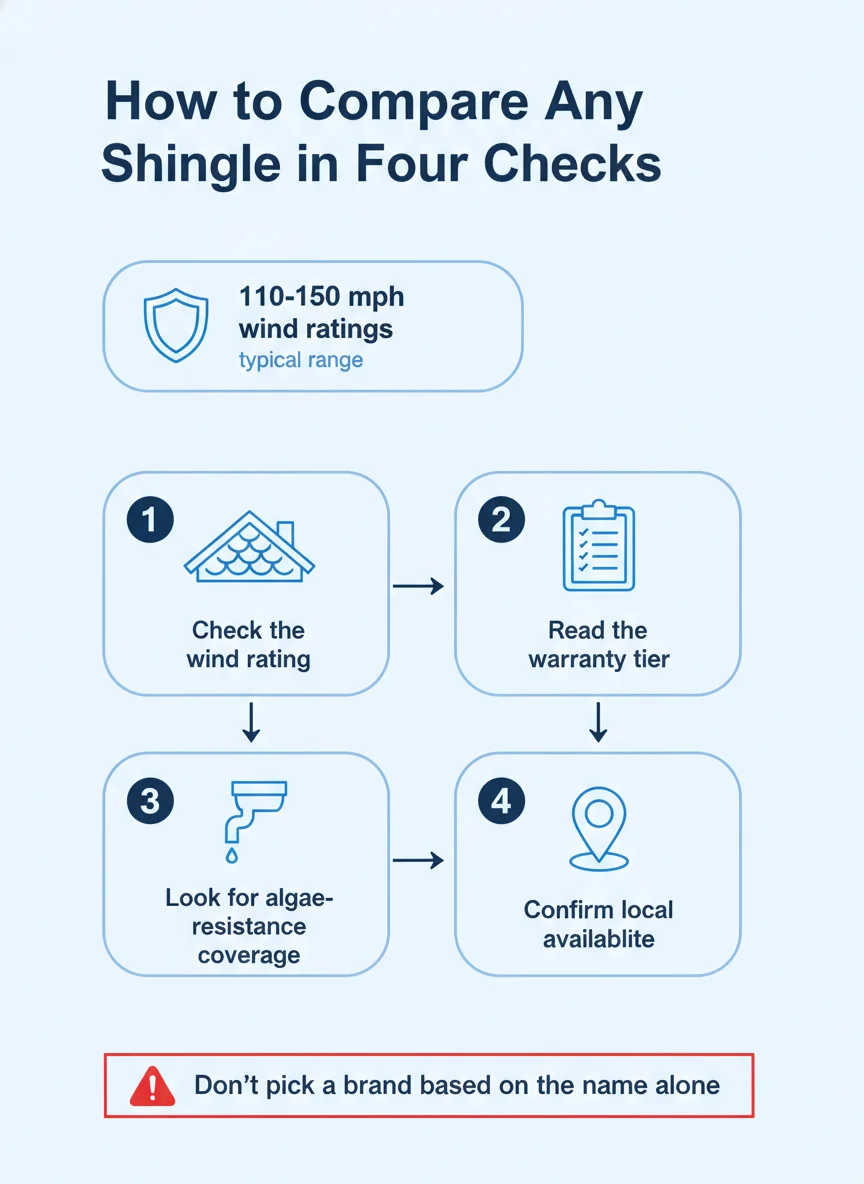
What Actually Separates One Shingle Brand From Another
Strip away the marketing and three things separate shingle products: the wind and impact rating they're tested and certified to, the structure of the warranty backing them, and whether they carry algae-resistant granules. Everything else, color names and texture descriptions, is cosmetic variation on top of those three fundamentals.
Wind and Impact Ratings
Wind ratings come from standardized testing and are published for each product line, with basic three-tab shingles typically rated lowest and architectural or impact-resistant lines rated higher. Impact ratings follow a separate Class 1 through Class 4 scale that measures resistance to impact damage, and Class 4 is the tier most associated with hail-prone regions.
Two shingles from different manufacturers in the same rated tier generally perform within a similar range in real-world testing, so comparing the rating number is more useful than comparing the brand name. If impact resistance matters to you, our post on impact-resistant Class 4 shingles breaks down what that rating means in practice.
Warranty Structures
Shingle warranties are rarely a single flat guarantee. Most are tiered: a full material-defect period for a set number of years, followed by a prorated period where coverage declines, and often a separate, shorter warranty specifically for algae resistance. Reading past the headline number on the wrapper is the only way to know what you're actually covered for.
Labor coverage for a defective shingle is a separate line item entirely, and it's usually tied to the installing contractor's certification level with that manufacturer rather than the shingle itself. That's worth asking about directly rather than assuming it's bundled into the material warranty.
| Product Tier | Typical Wind Rating Range | Typical Algae-Resistance Coverage |
|---|---|---|
| Standard three-tab | 60-80 mph | Shorter or not included |
| Architectural/laminate | 110-130 mph | 10-year range, varies by line |
| Impact-resistant (Class 4) | 110-150 mph | Often longer, varies by manufacturer |
What's Actually Inside a Shingle, and Why It Matters
Underneath the color granules, nearly all asphalt shingles share the same basic build: a fiberglass mat saturated with asphalt, topped with mineral granules that provide color, UV protection, and in some lines, algae resistance. The thickness of that mat and the weight of asphalt per square are what separate a basic shingle from a heavier architectural or designer product.
Heavier shingles generally handle wind uplift and impact better because there's more material holding the mat together, which is part of why Class 4 and architectural lines outperform three-tab shingles in both categories. It's also why a heavier shingle typically weighs more per bundle, something worth knowing if you're also asking about load on an older deck.
Step-by-step: How to Compare Shingle Brands Before You Buy
You don't need to become a materials expert to compare shingles intelligently. Working through these checks in order gets you a fair comparison in about the time it takes to sit through one quote appointment.
- Identify the tier: Decide whether you're comparing three-tab, architectural, or impact-resistant products, since that tier matters more than the brand name.
- Pull the wind rating: Ask for the published wind rating of each specific product you're considering, not a general brand claim.
- Read the warranty tiers: Find out where the full-coverage period ends and the prorated period begins, and whether algae resistance is covered separately.
- Check algae resistance: Confirm whether the granules are treated for algae resistance and how many years that specific coverage runs.
- Confirm local stock: Ask your contractor which of the brands you're comparing they actually keep in regular supply in your area.
- Compare samples in daylight: View physical samples outdoors, since color and texture read differently under indoor lighting than on a roof.
- Get the warranty in writing: Have the contractor confirm manufacturer registration will happen after install so the warranty is actually active.
What You'll Find When You Compare Samples Side by Side
Color and Texture Differences
Laid next to each other, architectural shingles from different manufacturers often look similar from the street but vary in granule blend consistency and shadow-line depth up close. Designer or luxury lines tend to mimic wood shake or slate texture more aggressively and carry a noticeably heavier feel in hand.
None of that visual variation tells you much about long-term performance, which is why it's worth pairing a visual comparison with the rating and warranty checks above rather than choosing on looks alone. Our guide to three-tab, architectural, and designer shingle grades goes deeper on how the tiers actually differ.
Algae and Streak Resistance
Algae-resistant shingles use copper-infused granules designed to slow the dark streaking that shows up on north-facing slopes in humid climates over time. Not every line in a manufacturer's catalog includes this treatment, so it has to be confirmed product by product, not assumed brand-wide.
Homes around Leander and the rest of Central Texas see enough humidity swings that algae streaking is a realistic long-term concern, even if it's cosmetic rather than structural. It's a reasonable factor to weigh when two products are otherwise similar in rating and price.
DIY Research vs Calling a Licensed Roofer
Homeowners can absolutely do the legwork of comparing published wind ratings, warranty summaries, and sample colors on their own, and it's smart to walk into any quote conversation already knowing the basics. Manufacturer websites publish spec sheets for most product lines, and that's public information worth reading before anyone shows up with a sample book.
Where a homeowner typically needs a licensed roofer is confirming which manufacturers a contractor is certified to install under enhanced warranty programs, since certification level can change what labor coverage you actually get. A roofer who installs a specific brand regularly will also know its real-world quirks, like how it handles in extreme heat or how often it's actually in stock locally.
Deck condition, flashing details, and ventilation also affect how any shingle performs over its service life, and those are areas where a trained eye during a Free Roof Inspections visit matters more than the brand decision itself. A great shingle on a poorly ventilated deck will underperform a mid-tier shingle installed correctly.
Making the Final Call on a Shingle Brand
The honest answer to 'which shingle brand is best' is that the tier, the warranty terms, and the quality of the installation carry more weight than the name on the wrapper. Two architectural shingles from different manufacturers at the same wind and impact rating will usually perform comparably, so the decision often comes down to warranty structure, available color, and which brand your installer has a strong working relationship with.
Bring your comparison notes, wind ratings, warranty tiers, and algae-resistance terms, to your next quote conversation and ask direct questions about each. Total Building Experts Roofing & General Contractor can walk through those specifics with you and help match a product to your home's actual exposure rather than just its curb appeal.
Frequently asked questions
Is one shingle brand really better than another?
Most national manufacturers make shingles that perform similarly within the same product tier. The bigger differences are usually between tiers, like three-tab versus architectural versus impact-resistant, not between one company's architectural line and a competitor's.
What does a shingle's wind rating actually tell me?
A wind rating tells you the sustained wind speed the shingle was tested to withstand when installed according to the manufacturer's instructions. Higher-tier architectural and impact-resistant shingles typically carry higher published ratings than basic three-tab shingles.
Do all shingle warranties cover the same things?
No, warranty structures vary a lot even within one manufacturer's lineup. Some cover material defects only, some include a prorated schedule after the first years, and algae resistance is often a separate, shorter warranty than the main material warranty.
Does a more expensive shingle brand always last longer?
Not automatically. Lifespan depends more on the product tier, the quality of the installation, and local climate exposure than on which manufacturer's name is on the wrapper, so a well-installed mid-tier shingle can outperform a poorly installed premium one.
How do I know if a shingle brand is actually available in my area?
Ask whoever is quoting the job which manufacturers they regularly order from, since distribution varies by region and not every brand's full lineup ships to every market. A roofer who installs a brand routinely will also know its warranty registration process.